

Explore the full range of titles - discover sports stars, scientists, artists and much more...
Explore the full range of titles
ShopArticles
Marie Curie: Biography and Facts for Kids
Posted on October 6, 2026
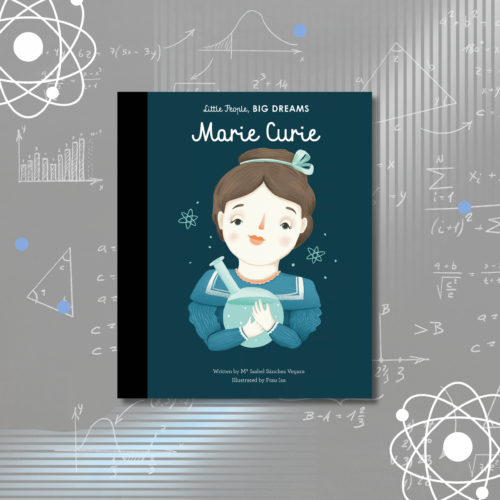
Marie Curie was a brilliant Polish and French physicist and chemist most famous for her groundbreaking work on radioactivity, discovering the radioisotopes radium and polonium. She was a woman who claimed numerous firsts during her life: the first woman to win a Nobel Prize, the first to win the prize twice, and the first woman to become a professor at the University of Paris.
Born in Warsaw in 1867, Marie was one of five children, all of whom pursued careers in medicine, education and science. ‘We all had much facility for intellectual work’, Marie said. Her mother was head of a school, and her father taught maths and physics.
After leaving Poland for Paris and receiving degrees in mathematics and physics, she met established scientist Pierre Curie in 1894, a professor in the School of Physics, and married him in 1895.
The Curies worked together investigating radioactivity, building on the work of German physicist Roentgen and French physicist Becquerel. In July 1898, the Curies announced the discovery of a new chemical element, polonium. At the end of the year, they announced the discovery of another, radium. The Curies, along with Becquerel, were awarded the Nobel Prize for Physics in 1903; Marie thus became the first woman to be awarded the Nobel Prize for Physics, and the Curies were the first married couple to win the prize.
Following Pierre’s death in 1906, she took his place as Professor of General Physics in the Faculty of Sciences at the Sorbonne University in Paris, the first time a woman held this position.
In 1911, Marie Curie received the Nobel Prize in Chemistry for the discovery of radium and polonium, the isolation of radium, and the study of the nature and compounds of radium. Not only was she the first person to receive two Nobel Prizes, but she also received them in two different fields of science.
After an illustrious career in science, Marie Curie died aged sixty-six in 1934.
Marie Curie At a Glance
– Full name: Marie Sklodowska Curie – her birth name was Maria Salomea Skłodowska, and her childhood nickname was Mania
– Born: November 7th, 1867, and died July 4th, 1934
– Nationality: Polish (by birth), French (by marriage)
– Profession: Scientist
– Known for: Her groundbreaking work on radioactivity, discovering the radioisotopes radium and polonium. Being not only the first woman to win a Nobel Prize, but the first person to win the prize twice
How Marie Curie Followed Her Dream
Marie Curie defied the odds by becoming educated. Growing up in Russian-controlled Poland, women were not allowed access to higher education. However, she and her sister, Bronia, overcame this and attended a ‘Flying University’, which educated young women in secret. Marie then moved to Paris to attend the Sorbonne in 1891.
She discovered both radium and polonium, naming the latter after Poland, the country she always thought of as home. Though she lived her entire adult life in France, she opened a research institute in Warsaw in 1932.
Ten Facts About Marie Curie for Kids
1. Marie Curie’s mother died of tuberculosis when Marie was just ten. On Saturday nights after her mother’s death, her father would read literary classics to Marie and her siblings. He also showed them the scientific apparatus he used teaching physics but was now forced to keep at home since the Russian authorities had eliminated laboratory instruction from the Polish curriculum.
2. Marie worked as a governess. After her sister, Bronia, moved to Paris to study medicine at the Sorbonne, Marie worked in Poland to support her sister’s education with the agreement that Bronia would support her to do the same a few years later.
3. Before moving to Paris in 1891 to study at the Sorbonne, Marie was a student at Warsaw’s clandestine ‘Flying University’, a secret educational network in Warsaw that provided higher education to women and others banned from official schools. It operated from 1885 to 1905 when Warsaw was under Russian control.
Classes moved constantly between private homes and apartments to avoid the Russian police. This shifting movement gave the school its ‘flying’ or ‘floating’ name.
4. Marie was introduced to her future husband, Pierre Curie, in 1894 by a mutual acquaintance who knew Pierre had the extra laboratory space Marie needed to carry out her research on the magnetic properties of steel.
Curie turned down Pierre’s marriage proposal three times. She finally accepted after he offered to give up his own scientific career to move to Poland with her. However, Marie was turned down for the position she wanted in Poland for being a woman, so she and Pierre stayed in Paris.
5. The Curies were an extraordinary Nobel Prize-winning family. Marie had two daughters: Irène, who also became a scientist and went on to win her own Nobel Prize in chemistry in 1935 (shared with her husband Frédéric); and Ève a concert pianist, then a writer, who has the distinction of being the only one in the family not to win a Nobel Prize. However, her diplomat husband, Henry Labouisse, accepted the Nobel Peace Prize on behalf of UNICEF in 1965, where he was the executive director.
6. Curie’s notebooks are radioactive. She died in 1934 of aplastic anaemia, thought to be caused by radium exposure, although Curie herself thought it was more likely due to the X-rays she was exposed to during the war. Today, Marie’s notebooks are still contaminated with radium so are stored in lead-lined boxes in France. Radium has a half-life of 1,600 years, so it’s unlikely this will ever change!
7. The Radium Institute was complete in 1914 but Curie’s researchers were drafted for the war. Marie realised X-rays could save soldiers’ lives by helping doctors to see bullets, shrapnel and broken bones, so she set up France’s first military radiology centres and was named Director of the Red Cross Radiology Service. She knew that if X-rays were available at the Front where soldiers were being injured, it would improve their chances of survival.
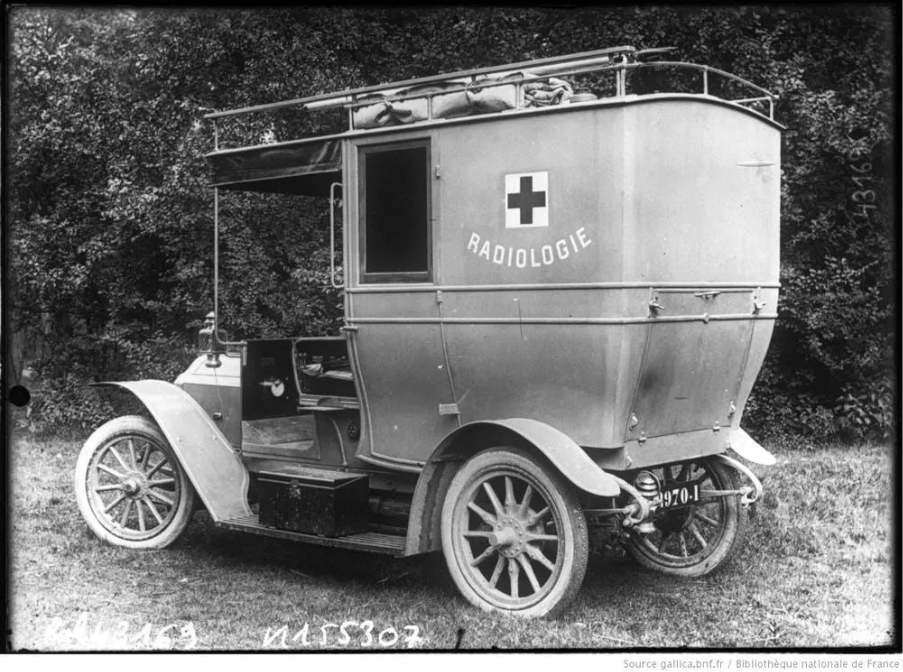
One of Curie’s mobile units used by the French Army - Bibliothèque Nationale de France, département Estampes et photographie
Frustrated by delays in securing funding from the French military, Curie approached the Union of Women of France. This philanthropic organisation gave her the money to produce the first car, which played an important role in treating the wounded at the Battle of Marne in 1914 – a major Allied victory that kept the Germans from entering Paris.
Curie eventually fitted 20 standard Renault cars with an X-ray machine, a photographic darkroom for processing plates, and a dynamo (generator) powered by the car’s engine to supply electricity, dubbed ‘petite Curies’. Intending to operate the petite Curie herself if necessary, Curie learned how to drive a car and researched basic anatomy, the use of X-ray equipment, and auto mechanics.
8. Marie’s first radiological assistant was her daughter Irène, who was just seventeen. Accompanied by a military doctor, they made their first trip to the battle front in the autumn of 1914, going on to save countless soldiers’ lives.
Curie also trained 150 female volunteers to operate the vans, X-rays and photographic processing and anatomy.
9. Marie and Pierre were originally buried in a quiet cemetery south of Paris. However, in 1995, French President François Mitterand wanted to move them to the Pantheon, where France’s greatest historical figures are laid to rest. Marie became the first woman to be honoured there for her own achievements, rather than as someone’s wife.
10. Curie travelled to the US twice, in 1921 and in 1928. On the 1921 trip, in recognition of her achievement in science, US President Warren G. Harding, presented her with one gram of radium, on behalf of the women of America. This was more valuable than diamond and also crucial for Marie’s research.
What Can Children Learn From Marie Curie?
Never Give Up
Marie Curie showed extraordinary determination, overcoming severe hardship and sexism both in her homeland of Poland and in male-dominated academic environments. She devoted her life to science, claiming it is, ‘the basis of all progress that alleviates human life and reduces suffering’. She understood the therapeutic potential of her and her husband’s discoveries and also recognised the importance of uniting scientists, intellectuals and doctors globally to work together.
Curie joined the International Committee on Intellectual Cooperation to help scientists from different countries combine their research and skills after World War I, and was a core member of the Solvay Conferences, where the world’s top scientists gathered to share ideas.
Leadership and Legacy
Marie Curie’s husband, Pierre, was tragically hit by a horse-drawn carriage and died in 1906, leaving his wife to inherit his professorship at the University of Paris Faculty of Science and the management of his physics laboratory.
In 1909 Curie oversaw the creation of the Institut du Radium, whose aim was to provide France with a research centre into radioactivity and its possible applications in medicine.
To finance its operations, the Fondation Curie was created in 1921 and recognized as a public utility. In 1922, it enabled the opening of a dispensary on rue d’Ulm, offering innovative cancer therapies, including radiotherapy. The structure and its operation paved the way for what would later become Institut Curie.
Curie’s work laid the foundation for everything from modern nuclear physics to cancer treatments and radiography. Her techniques for isolating radioactive isotopes are still used in research and medicine.
Gender Equality
From studying at the ‘Flying University’ to setting up the Institut du Radium and Fondation Curie, Marie Curie demonstrated to a whole generation of women that access to academia and leadership roles is possible.
At the famous 1927 Solvay Conference on Quantum Mechanics, Curie was the only woman invited, among 29 of the world’s most prominent physicists.
The Institut Curie continues this fight for gender equality in the academic world today.
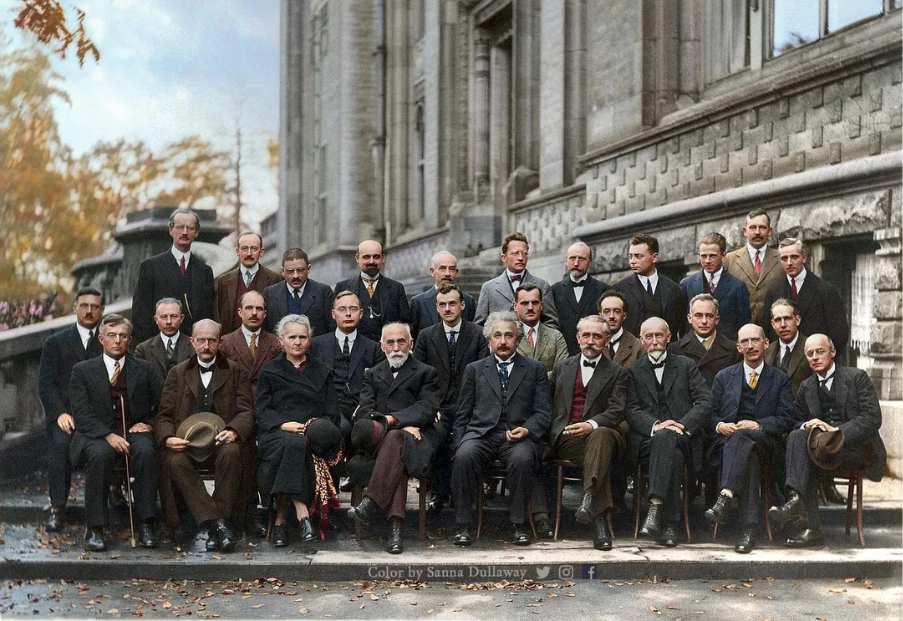
The 1927 Solvay Conference – dubbed ‘the most intelligent photo ever taken’
Read More About Marie Curie
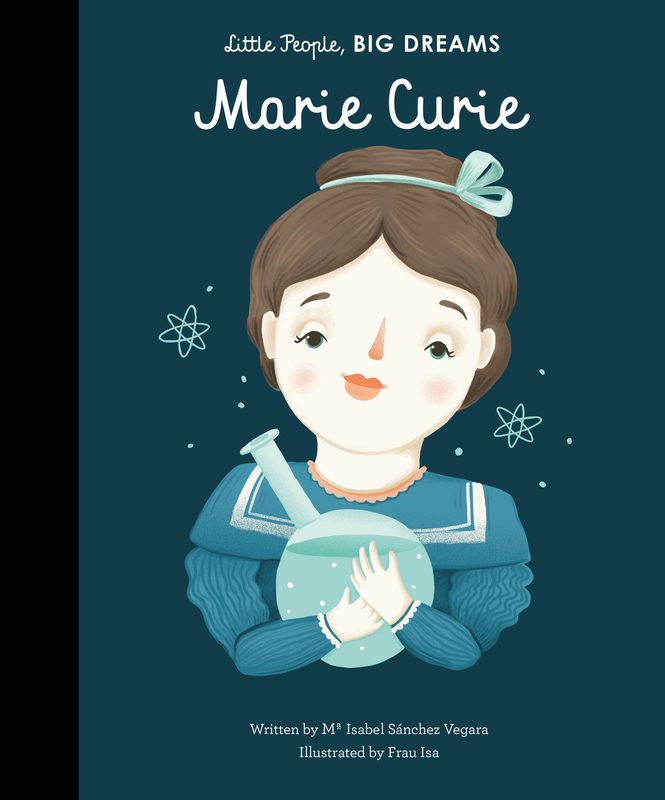
Discover more about Marie Curie’s inspirational life in Little People BIG DREAMS Marie Curie.
Be inspired by other pioneering women and scientists such as Ada Lovelace (the world’s first computer programmer), Mary Anning (the mother of palaeontology), Albert Einstein (the legendary scientist was a close friend of Marie Curie’s), Nikola Tesa (the brilliant inventor), Louis Pasteur (the father of modern medicine) and Hedy Lamarr (the inventor of technology that was a precursor to WiFi, GPS and Bluetooth).
RELATED PRODUCTS

Louis Pasteur
Illustrated by Shelly Laslo
Discover the life of Louis Pasteur, the French chemist and the father of modern medicine. Little Louis was born in …

Hedy Lamarr
Illustrated by Maggie Cole
From the critically acclaimed Little People, BIG DREAMS series, discover the life of Hedy Lamarr, the actress and inventor whose …

Nikola Tesla
Illustrated by Alexander Mostov
From the critically acclaimed, multimillion-copy bestselling Little People, BIG DREAMS series, discover the life of Nikola Tesla, the scientist and …

Albert Einstein
Illustrated by Jean Claude
Meet Albert Einstein, the legendary scientist. Little Albert grew up in Germany, where it took him four years to formulate …

Mary Anning
Illustrated by Popy Matigot
Meet Mary Anning, the first paleontologist, and daring fossil hunter. When Mary was little, her family was very poor. She …

Marie Curie
Illustrated by Frau Isa
Meet Marie Curie, the Nobel Prize–winning scientist. When Marie was young, she was unable to go to college because she …

Ada Lovelace
Illustrated by Zafouko Yamamoto
Meet Ada Lovelace, the British mathematician and daughter of poet Lord Byron. Follow the colourful life of Lord Byron’s daughter, …
Quarto Kids on social media (for grown-ups)