

Explore the full range of titles - discover sports stars, scientists, artists and much more...
Explore the full range of titles
ShopArticles
Martin Luther King Jr.: Biography and Facts for Kids
Posted on October 21, 2026
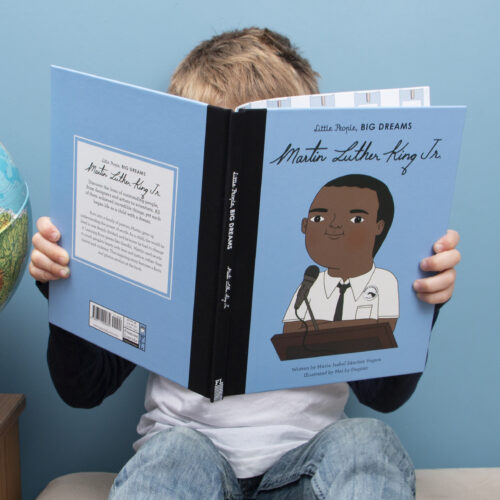
A revolutionary leader, a preacher, a powerful speaker, and a tireless advocate for justice and equality, Nobel Peace Prize laureate Dr Martin Luther King Jr. (1929-1968) led a movement that changed America and inspired the world, beginning in the mid-1950s.
The mastery and impact of his ‘I Have a Dream’ speech, delivered at the ‘March on Washington’ in front of more than 250,000 people, earned it the top honours in a list of the 100 best political speeches of the 20th Century.
Martin Luther King Jr.’s rousing ‘I Have a Dream’ speech from 1963
Martin grew up in a world shaped by segregation, with separate schools and where bus seating divided people according to whether they were Black or white.
His father, the pastor of Ebenezer Baptist Church in Atlanta, fought against racial prejudice, because he considered racism and segregation to be an affront to God’s will. He strongly discouraged any sense of class superiority in his children, which left a lasting impression on his son.
Influenced by his experiences with racism, King Jr. became interested in the ideas of social activism at Atlanta’s Morehouse College in the mid-1940s.
‘I was at the point where I was deeply interested in political matters and social ills. I could envision myself playing a part in breaking down the legal barriers to Negro rights.’
Originally, he thought the best way to achieve this aim was as a lawyer or a doctor. After earning a sociology degree from Morehouse, he attended the liberal Crozer Theological Seminary in Pennsylvania. Benjamin E. Mays, Morehouse’s President, was an outspoken advocate for racial equality, and encouraged his students to view Christianity as a potential force for social change.
Later, when studying systematic theology at Boston University in 1955, King was struck by Mahatma Gandhi’s campaigns of non-violent resistance against British colonial rule, and how those principles became a method for mass political action. King would later say, ‘Christ showed us the spirit, and Gandhi showed us the method,’, believing that love and understanding could overcome hatred and injustice.
At just 26, King was chosen to lead the newly formed Montgomery Improvement Association, and he became the symbol of a rising movement during the Montgomery Bus Boycott, (1955-56), which began in response to Rosa Parks refusing to give up her seat for a white passenger. His inspiring speeches stressed that non-violence was not a passive form of resistance: ‘Nonviolence is a powerful and just weapon. It is a weapon unique in history, which cuts without wounding and ennobles the man who wields it.’ The resulting Civil Rights Act of 1964 outlawed segregation in public places.
One of Martin Luther King Jr.’s defining moments came in Birmingham, Alabama, in 1963. The city was notorious for being one of the USA’s most segregated cities, with a brutal police force. King and the Southern Christian Leadership Conference launched a campaign of boycotts and sit-ins, however, the police, led by Commissioner Bull Connor, responded with fire hoses and dogs. Images from this skirmish, including of children being attacked, shocked the world.
King himself was arrested and while he was in prison, he wrote the Letter from Birmingham Jail. In it, he answered white clergy who had criticised him as an outsider and an agitator. His words on justice are just as powerful today:
‘Injustice anywhere is a threat to justice everywhere. We are caught in an inescapable network of mutuality, tied in a single garment of destiny. Whatever affects one directly, affects all indirectly.’
King also helped to lead the March on Washington for Jobs and Freedom. On 28th August 1963, more than 250,000 people gathered before the Lincoln Memorial. King’s prepared speech took a different direction when gospel singer Mahalia Jackson shouted out from behind him, ‘Tell them about the dream, Martin!’ He departed from his notes, and declared that, ‘I have a dream that one day this nation will rise up and live out the true meaning of its creed.’
Following the brutal repression of marchers in Selma, Alabama, the Voting Rights Act of 1965 was passed, ensuring the right to vote could no longer be denied. King was awarded the Nobel Peace Prize in 1964, becoming the youngest recipient in history at the time. He also condemned the Vietnam War, and fought for economic justice and the abolition of poverty.
Assassinated by James Earl Ray, King died in Memphis on April 4th, 1968, at the age of just 39.
His death was devastating but he continues to be remembered as one of the most influential and inspirational leaders in history. His legacy lives on: there are more than 730 US streets are named after him, many schools and memorials bear his name and his birthday is honoured as a national holiday in the US.
MLK’s life and legacy have also inspired movies including Selma (2014), Boycott (2001), I Am MLK Jr. (2018) and The Boy King (1986).
Martin Luther King Jr. At a Glance
– Name: Martin Luther King Jr.
– Born: January 15th, 1929 in Atlanta, Georgia
– Died: April 4th, 1969
– Nationality: American
– Profession: Baptist minister, Civil Rights leader
– Known for: His celebrated ‘I Have a Dream’ speech; his insistence on non-violent protest
– Major achievements: Being awarded the Nobel Peace Prize; influencing the passing of the Civil Rights Act of 1964, and the Voting Rights Act of 1965. He was awarded five honorary degrees, and was named Man of the Year by Time magazine in 1963
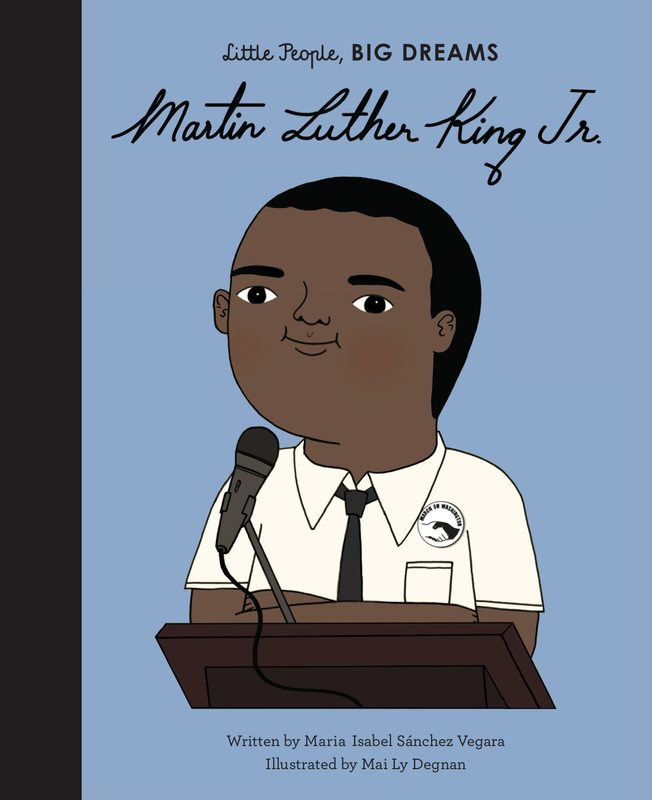
How Martin Luther King Jr. Followed His Dream
Through his nonviolent activism and inspirational speeches, Martin Luther King Jr. played a pivotal role in ending the legal segregation of Black Americans, as well as the creation of the Civil Rights Act of 1964 and the Voting Rights Act of 1965.
Martin Luther King Jr. developed six principles of nonviolence:
1. Nonviolence is a way of life for courageous people
2. Nonviolence seeks to win friendship and understanding
3. Nonviolence seeks to defeat injustice, not people
4. Nonviolence holds that suffering for a just cause can educate and transform
5. Nonviolence chooses love instead of hate
6. Nonviolence believes that the universe is on the side of justice
King also frequently cited the ‘Beloved Community’ – a world in which a shared spirit of compassion brings an end to the evils of racism, poverty, inequality and violence – as the end goal of his activist efforts.
Ten Facts About Martin Luther King Jr. for Kids
1. Martin Luther King Jr. was born with a different name. Born Michael King Jr., his father later changed both of their names to Martin in honour of Martin Luther, the seminal figure of the Protestant Reformation, who is considered one of the most influential figures in Christian history.
2. He was a brilliant student. Martin Luther King Jr. skipped two grades in high school and started attending Morehouse College when he was only fifteen years old.
3. He received a number of posthumous awards, including a Grammy Award in 1970 for Best Spoken Word Recording for ‘Why I Oppose the War in Vietnam’, the Presidential Medal of Freedom in 1977, and the Congressional Gold Medal in 2004.
4. The Nobel Prize Official Biography states that between 1957 and 1968, Martin Luther King Jr. travelled over 6 million miles across the United States and internationally, (including trips to Ghana and Germany), to support civil rights protests and movements, and gave more than 2,500 speeches.
5. Dr. King was the first modern private citizen to be honoured with an American federal holiday. Celebrated on the third Monday in January, Americans are encouraged to spend the day volunteering and strengthening their communities.
There are only three other Americans besides Dr. King to have their birthday observed as a national holiday: George Washington, Abraham Lincoln and Cesar Chavez.
6. Martin Luther King Jr.’s birthday was approved as a federal holiday in 1983, and all 50 states made it a state government holiday by 2000.
7. Stevie Wonder wrote and released the song ‘Happy Birthday’ in 1980 as a direct tribute to Martin Luther King Jr., and as a campaign anthem to establish his birthday as a US national holiday. He partnered with Coretta Scott King (Martin Luther King Jr.’s wife) and presented a petition with over six million signatures to Congress in 1982.
8. Martin Luther King Jr. and Coretta Scott King had four children, who are mentioned in his famous ‘I Have a Dream’ speech. In the speech, Dr. King says of them, ‘I have a dream that my four children will one day live in a nation where they will not be judged by the colour of their skin but by the content of their character.’
9. MLK was a Star Trek fan – and changed the show’s history. After finishing the first season in 1967, Nichelle Nichols (who played Lieutenant Uhura) planned to quit the series. However, at an NAACP fundraiser, Dr. King approached her, introduced himself as a massive fan of the show, and revealed that it was the only TV show he allowed his children to stay up and watch. When Nichols revealed she was leaving, Dr. King urged her to stay, explaining that she was a vital role model. He emphasized that Star Trek was groundbreaking because it showed Black people respected as intelligent, capable equals and bridge officers in the future, rather than in stereotypical roles.
10. When Dr. Martin Luther King Jr. received the Nobel Peace Prize at the age of 35 in 1964, he was the youngest person to have ever received it. Today, Malala Yousafzai holds this accolade; she was just seventeen when she received the prize.
What Can Children Learn From Martin Luther King Jr.?
Martin Luther King Jr.’s activism and beliefs offer valuable lessons in justice, courage, and the value and effectiveness of advocating for peaceful change.
Although he was assassinated at the age of just 39, the ideas he preached of non-violence and love as a force for change remain equally vivid and influential today. His life shows how conviction, faith and determination can transform the course of a whole country.
Read More About Martin Luther King Jr.
Read more about how Martin Luther King Jr.’s Six Principles of Nonviolence can guide efforts to encourage and create social and interpersonal change in this article from The King Center, and about his childhood and life in Little People BIG DREAMS. You can also read about Mahatma Gandhi, whose peaceful protests inspired MLK, in his Little People BIG DREAMS book.
RELATED PRODUCTS

Nelson Mandela
Illustrated by Alison Hawkins
Meet Nelson Mandela, South Africa’s first Black president, and his fight for equality. Little Nelson’s given name was Rolihlahla, which …

Malala Yousafzai
Illustrated by Manal Mirza
Meet Malala Yousafzai, the incredible activist for girls’ education and the youngest Nobel Prize laureate. When Malala was born in …

Mahatma Gandhi
Illustrated by Albert Arrayás
Meet Mahatma Gandhi, a champion of peace and human rights. As a young teenager in India, Gandhi led a rebellious …

Stevie Wonder
Illustrated by Melissa Lee Johnson
Meet Stevie Wonder, the genius behind some of the world’s best-loved songs. At just 8 years old, it was clear …

Martin Luther King Jr.
Illustrated by Mai Ly Degnan
Meet Martin Luther King Jr., the inspiring minister and civil rights activist. Little Martin grew up in a family of …
Quarto Kids on social media (for grown-ups)