

Explore the full range of titles - discover sports stars, scientists, artists and much more...
Explore the full range of titles
ShopArticles
Rosa Parks: Biography and Facts for Kids
Posted on October 13, 2026
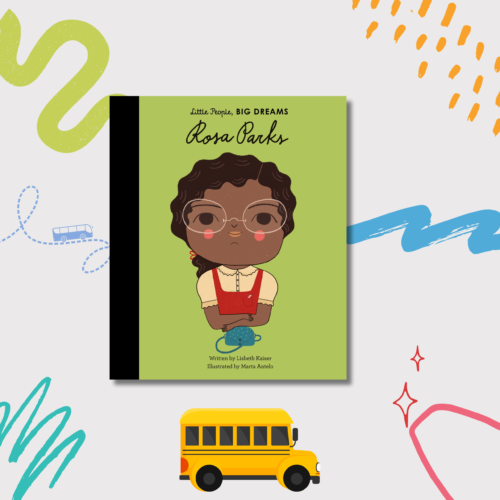
Rosa Louise McCauley Parks (1913-2005) was an American civil rights activist, sometimes known as the ‘mother of the Civil Rights movement’.
Born in Alabama in 1913, when Rosa was growing up, schools, water fountains, restaurants and even pavements were divided by strict segregation laws known as ‘Jim Crow’ laws for white and Black Americans. The US Supreme Court legalised these practices in the 1896 case Plessy v. Ferguson, claiming separate facilities were constitutional if they were equal. However, the reality was that facilities for Black Americans were poorly funded and often inferior. Southern states also used poll taxes, literacy tests and property requirements to block African Americans from voting.
On December 1, 1955, Rosa sat in the ‘coloured’ section of the bus, in a middle row. The front was reserved for white passengers and the back for Black passengers. If the ‘white section’ filled up, Black passengers were expected to give up their seats.
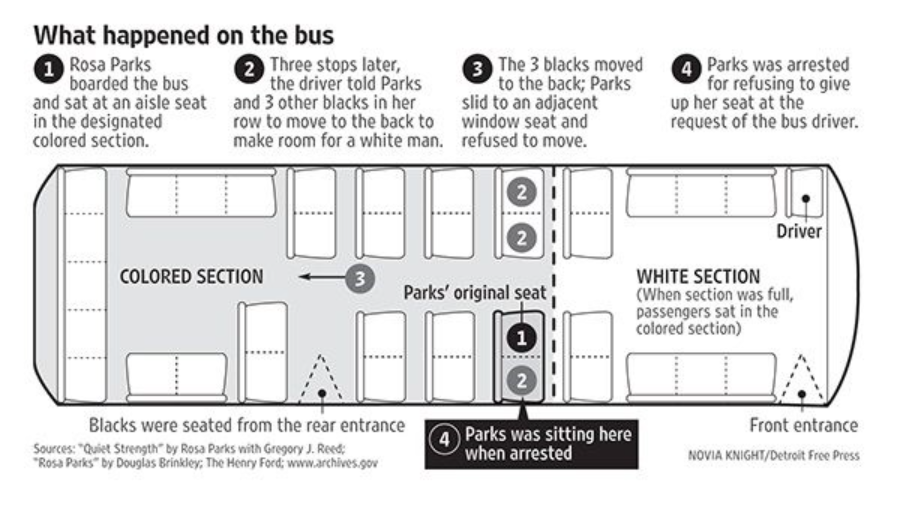
Novia Knight/Detroit Free Press and CountyConnection.com
However, when the bus driver told her and three others to give up their seats for a white man, Rosa quietly refused. The driver threatened her, but Rosa simply said, ‘No.’ She was risking arrest, humiliation – even violence – but she was determined to stand up for her rights. Years later, Rosa, revealed her motivation:
‘People always say that I didn’t give up my seat because I was tired, but that isn’t true. I was not tired physically, or no more tired than I usually was at the end of a working day. I was not old, although some people have an image of me as being old then. I was 42. No, the only tired I was, was tired of giving in.’
Rosa Parks tells the story of her protest and arrest in her own words
Her arrest made headlines and inspired action: Black residents refused to ride the city buses until the system changed. This became known as the Montgomery Bus Boycott. For over a year, Black residents refused to back down, creating a massive financial blow to the bus system, as they comprised 70% of the customers using it. Finally, the US Supreme Court ruled that segregation on public buses was unconstitutional. One woman’s bravery sparked a movement that changed history.
Rosa Parks: At a Glance
– Name: Rosa Louise McCauley
– Born: February 4th, 1913, in Tuskegee, Alabama
– Nationality: American
– Profession: Seamstress and Civil Rights leader
– Known for: Refusing to give up her seat on a bus, kick-starting the Montgomery Bus Boycott, which eventually led to a change in segregation laws
– Major achievements: Rosa received the Presidential Medal of Freedom in 1996, and the Congressional Gold Medal in 1999
How Rosa Parks Followed Her Dream
Following her parents’ separation, Rosa moved with her mother and younger brother to her maternal grandparents’ home in Pine Level, Alabama. She was educated at the Industrial School for Girls in Alabama’s capital city, Montgomery, but at the age of sixteen she stopped studying to help support her family.
In 1932, Rosa married barber Raymond Parks, who was active in the local NAACP (National Association for the Advancement of Coloured People) chapter. With Raymond’s encouragement, Rosa completed her high school education in 1933 and she gradually became more involved in the civil rights struggle.
Following her refusal to move on the bus, which resulted in her arrest, the story hit the headlines. She was found guilty of disorderly conduct and violating Montgomery’s segregation law. On the same day as her trial, activists had organised a one-day boycott of the city’s buses.
The boycott – 90% of Montgomery’s black citizens stayed off the buses – was a success. It led to the creation of the Montgomery Improvement Association (MIA) and Martin Luther King Jr. was elected as its president.
The Montgomery Bus Boycott then became a mass protest that lasted 381 days and involved 40-50,000 Black residents walking, carpooling, cycling or using taxis instead of taking the city buses.
On 5 June 1956, the federal district court ruled in Browder v. Gayle that bus segregation was unconstitutional and in November 1956 the US Supreme Court affirmed Browder v. Gayle and struck down laws requiring segregated seating on public buses. The Supreme Court upheld the lower court’s ruling and on 20th December 1956 King called for the end of the boycott. King said of the bus boycott, ‘We came to see that, in the long run, it is more honourable to walk in dignity than ride in humiliation. So… we decided to substitute tired feet for tired souls, and walk the streets of Montgomery.’
The Parks eventually relocated to Detroit, Michigan, where Rosa found work as a seamstress. She was later offered a position as receptionist and secretary in John Conyers’ Detroit office when he was elected to the US House of Representatives. She held this role until she retired in 1988.
Rosa founded the Rosa L. Parks Scholarship Foundation in 1980 and co-founded the Rosa and Raymond Parks Institute for Self-Development in 1987. Both organisations are still active and continue her legacy.
Rosa passed away at the age of 92. President George W. Bush ordered all US flags to be flown at half-mast in her honour; she was also given the honour of lying in state in the rotunda of the US Capitol.
Learn more about Rosa Parks’s life and impact
Ten Facts About Rosa Parks for Kids
1. Following her death in 2005, Rosa was the first woman, and the second African American to lie in state.
2. On February 27th, 2013, a statue of Rosa was unveiled in the National Statuary Hall in the US Capitol. The statue had been requested by President Bush on December 1st, 2005, the 50th anniversary of Parks’s arrest.
3. The Rosa Parks Scholarship Foundation has awarded more than $3 million in scholarships to more than 1,600 high school seniors since its founding by The Detroit News and Detroit Public Schools in 1980.
4. Time magazine named her one of the twenty most influential people of the 20th century in 1999.
5. She received over 40 honorary doctorate degrees from universities worldwide, including Spelman College and Yale University.
6. She published her autobiography, Rosa Parks: My Story, co-authored with Jim Haskins, in 1992, and a second book, Quiet Strength, focusing on her faith and values, in 1995.
7. The city of Detroit renamed 12th Street (where she lived during the 1967 riots) ‘Rosa Parks Boulevard’ in 2005.
8. An estimated 30,000 to 50,000 people visited the Capitol to pay their final respects, and Rosa’s funeral service in Detroit lasted over seven hours at the Greater Grace Temple, attended by thousands.
9. The Maryland Transit Administration (MTA) celebrates Transit Equity Day on Rosa Parks’s birthday, February 4th by offering free rides on their transport services, and a seat is reserved on their buses in her honour.
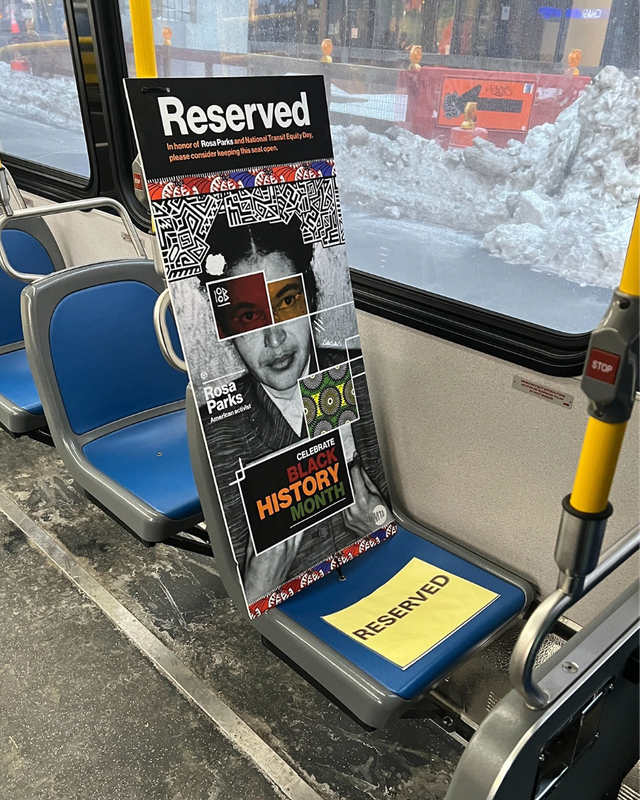
Credit: @MTA
10. The State of Alabama declared December 1st, the date of her arrest, ‘Rosa Parks Day’ as an official state holiday. California and Ohio also celebrate Rosa Parks Day on her birthday, February 4th.
What Can Children Learn From Rosa Parks?
When it comes to inspirational women for kids, Rosa Parks shows that one person’s voice can make a huge difference, and that quiet strength and determination can be as courageous as loud speeches or grand gestures.
The Montgomery Bus Boycott showed the potential for nonviolent mass protest to successfully challenge racial segregation. This became the model for civil rights activism in the South of the US in the 1950s and 60s.
Read More About Rosa Parks
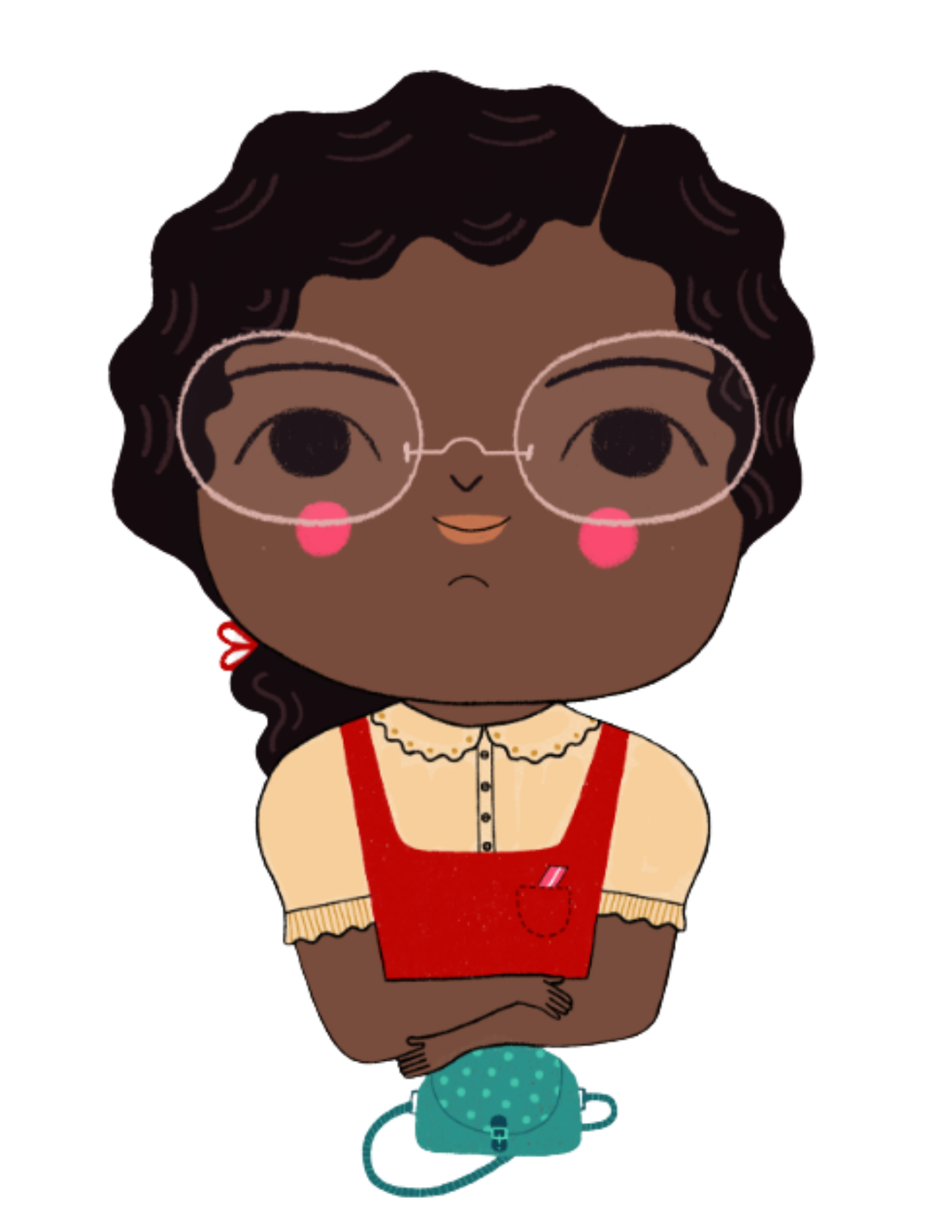
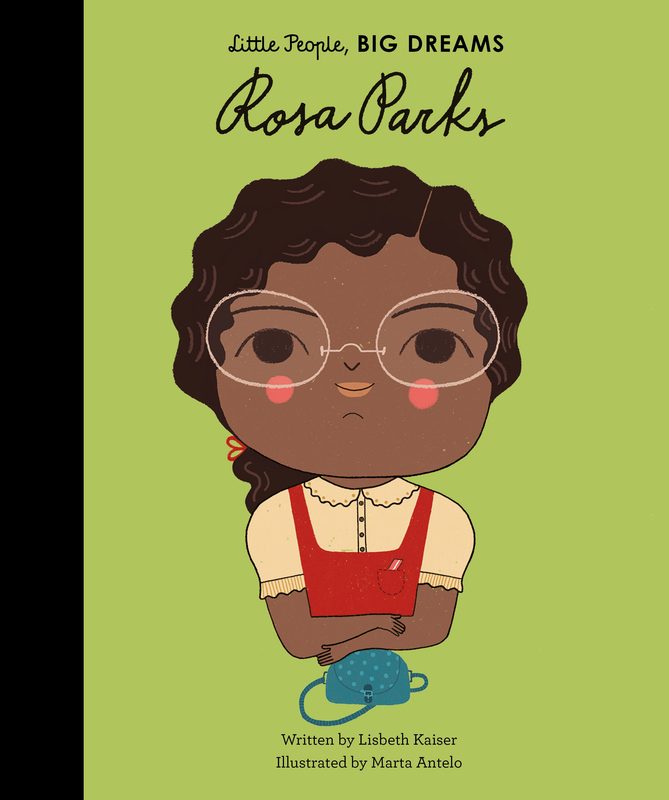
Rosa Parks’s impactful life is the subject of a Little People BIG DREAMS book, where you can discover more details about her early life, as well as her long career. Rosa is also one of the top ten Inspirational Black People whose lives and achievements make them great role models for children and young adults.
RELATED PRODUCTS

Nelson Mandela
Illustrated by Alison Hawkins
Meet Nelson Mandela, South Africa’s first Black president, and his fight for equality. Little Nelson’s given name was Rolihlahla, which …

Rosa Parks
Illustrated by Marta Antelo
Meet Rosa Parks, the "Mother of the Freedom Movement." Rosa Parks grew up in Alabama, where she learned to stand …

Martin Luther King Jr.
Illustrated by Mai Ly Degnan
Meet Martin Luther King Jr., the inspiring minister and civil rights activist. Little Martin grew up in a family of …
Quarto Kids on social media (for grown-ups)